The couple we had dined with during our first dinner in Oaxaca had suggested several towns for us to visit. Karl and I had (uncharacteristically) left this trip very open, not making the detailed plans we typically do for international travel. It felt like when we were on Contigo, with our no-schedule schedule, which enabled us to come and go (and potentially return) to spots as we pleased.
One of these stops was San Agustin Etla, a small town about 40 minutes outside of the center of the Oaxaca. We had stayed for a week at the beginning of the trip and enjoyed it so much we returned later to stay for a month.
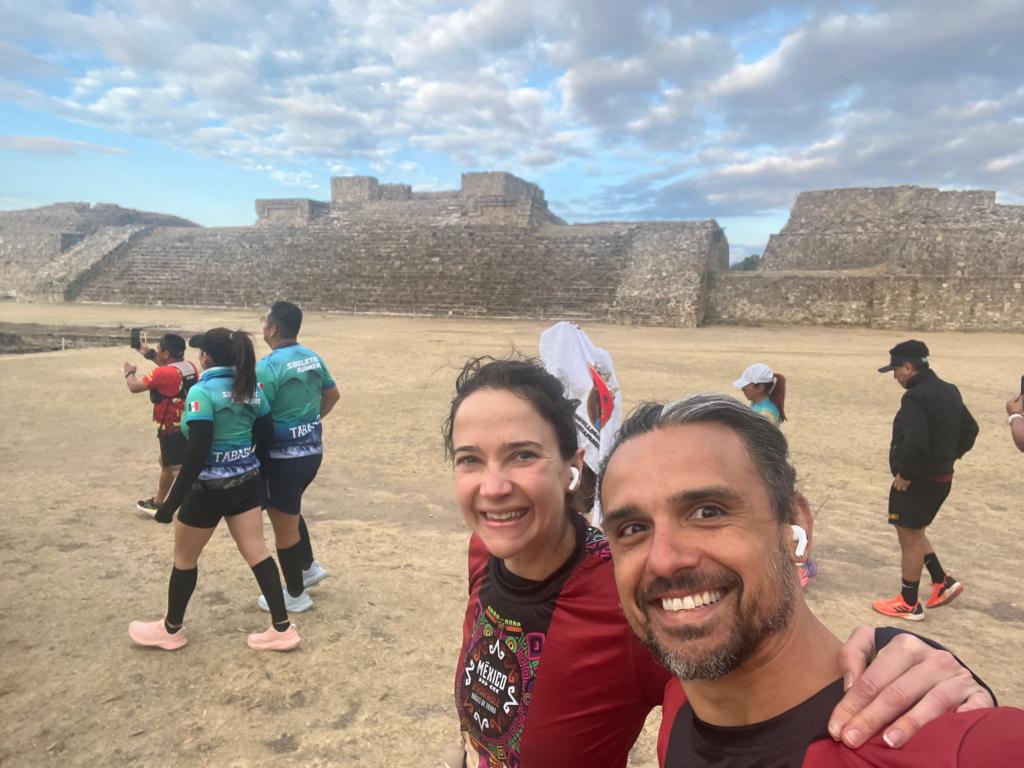
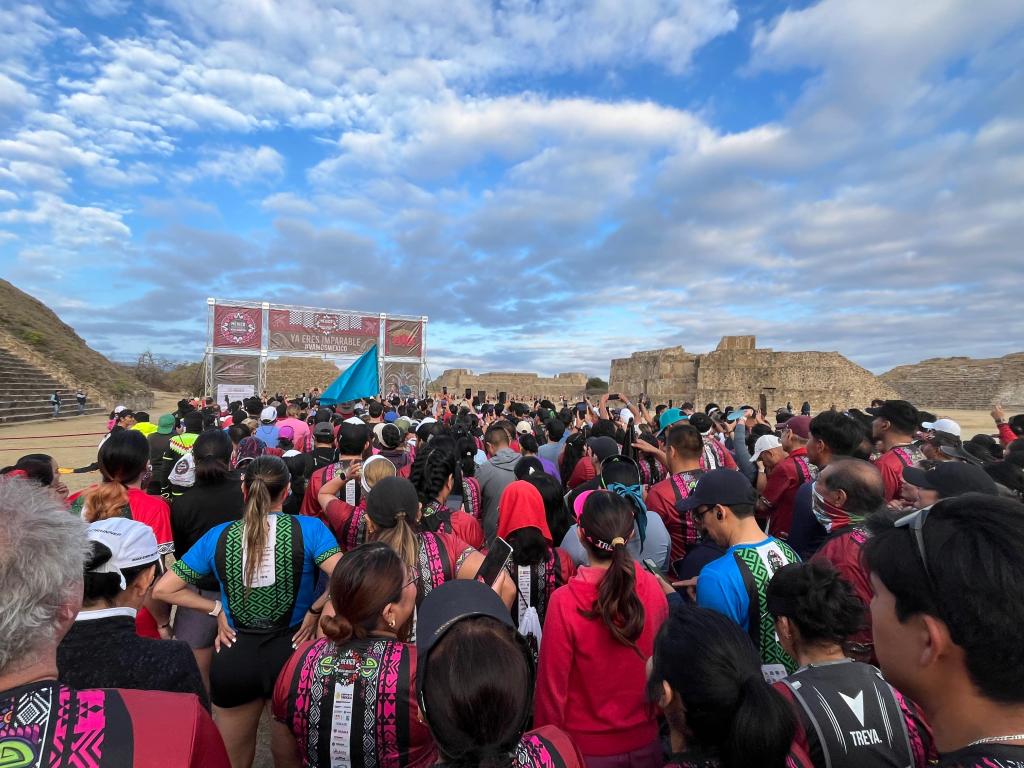
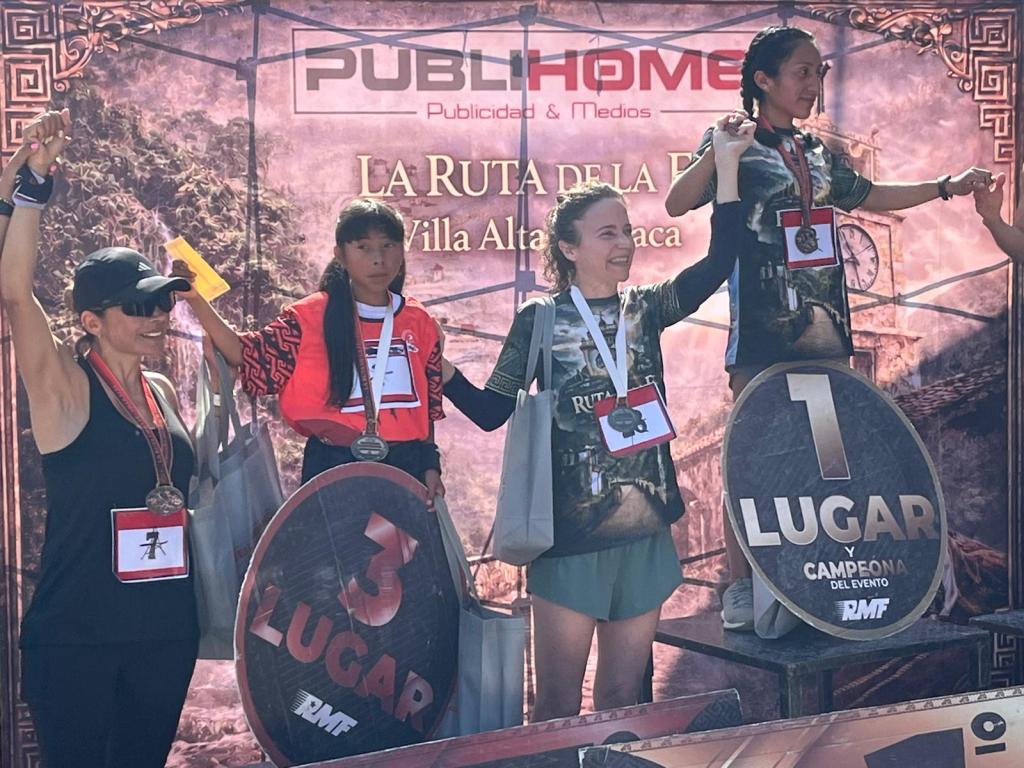
To balance out the excessive totopo and taco consumption, earlier in the trip we had participated in two organized races. Family members of the couple we had dined with had told us it was easy to find an organized race almost every weekend, and as an introduction to this running culture, they kindly hosted us in Villa Alta, a town in the Sierra Norte of Oaxaca, for a 9K run. A few weeks later we ran a 13K, starting from Monte Alban, down to the center of Oaxaca. So, I was excited to create an outside “course” in Etla I could become familiar with over the next month.
The only time to run in Oaxaca is early in the morning or late in the evening. I double tied my sneakers, which, despite being almost brand-new, had already begun to show their wear from the dusty, uneven Oaxacan roads. It was just after six in the morning, but the one road running through Etla was active: moto-bikes with speakers crooning “tamales for sale,” cars of impressive ages rattling by, construction trucks spewing grey smoke, pedestrians walking the last hundred meters (or more) to work. It didn’t feel that hospitable for a jogger. Then I noticed one man jogging and optimistically retracted my thought – just one additional person implied I wasn’t the only looney one expecting to run out here. But as he came closer, I saw he was gripping a large stick, the width of a baton, maybe three feet long. A few minutes later, I saw a woman walking who was also carrying a similar apparatus. These were not walking sticks. They were defense against Latin American dogs.
I suddenly felt exposed. Getting swiped by one of Oaxaca’s lead-foot drivers was already a mild concern, but a dog taking a bite out of my leg now felt more real.
A few days later I asked the owner of our AirBnB, a fit, UPenn graduated physician, about running outside. She (not unkindly) gave me a look that I can only describe as “exasperated doctor.” I might as well have told her I was chain-smoking cigarettes and drinking tequila for breakfast. The next day I got a gym membership.
The walk to the gym was 20 minutes. In the first few days, I was a silent partner in the morning rituals that were happening all around me, such as the fresh (as in alive) chicken being delivered to the pollería. As my habit developed, I noticed those of others as well. There was an elderly man who would sit in a wooden straight-backed chair at the threshold of his house that opened onto the street. I would see him before he would see me, his faraway look signifying he was somewhere else. But upon coming into his view, he would always say “Buenos días, buenos días,” as I walked by. I started saying it first just to make sure he didn’t miss me. It was a stark contrast to my former commute in Manhattan, during which I had neither the desire nor mental or emotional capacity to converse with another being. My small talk muscle had atrophied, and improving my Spanish depended upon building it back up again. Any excuse to speak with someone for just a little longer – such as asking the woman at the convenience store who sold the best fresh cheese – was developing my voice. One morning I stopped to speak with an environmental engineer who was out walking his dog, my Spanish somehow withstanding the time it took for him to explain the water woes of Oaxaca (prognosis: not good).
After a month we moved onto Huayapam, another town just outside of the center of Oaxaca, and another potential contender in our unofficial competition for “Karl and Conner settling.” I had scoped out some streets that seemed relatively tranquil for jogging and walking. Dogs were out, but many seemed so sleepy from the heat (and from barking all night) they were more like obstructions to my path than actual beings that would give chase. Plus, due to a permanent road closure, there were many people walking on what was typically a heavily trafficked road, making it a loop of sorts.
But, one morning, probability caught up with me. I had just started to jog up a hill where there were two dogs (both of whom I had run by the previous day) barking at another dog inside a fenced-in property. As I tried to jog by, one of the outside dogs bit me. I want to emphasize – the wound was superficial; it barely broke the skin. I felt more stupid than in any physical pain. Something that I knew was a strong – and avoidable – possibility had occurred, and importantly, Karl had already warned me. I stopped jogging and sheepishly walked for a bit, finally meeting up with Karl at the local market, where I blithely told him a dog had taken a superficial nibble out of my leg. Karl, having grown up in Venezuela, responded with alarm, saying I needed a rabies vaccine, ASAP. After striking out at two medical centers, and twice crossing the center of Oaxaca, we finally were able to speak with a nurse who delivered alarming and pacifying news in the same sentence: the state of Oaxaca had no rabies vaccines, but I would be fine. She did her best to calm us both, saying that dog vaccinations were free, most owners had them, and the only thing we could do was monitor the said dog for changes in behavior.
Whereas I had been content in just saying “Buenos días,” and buying queso fresco, feeling quite proud of my conversational skills, it seemed my next lesson was to be a little more advanced. I needed to find the owner of the dog and explain the situation.
After asking two neighbors and peering behind corrugated metal fences and locked gates, I saw the bite-happy dog inside a property and, politely as I could, banged on the gate. I introduced myself, the owner’s name was Max. I told him, trying very hard not to sound accusatory, what had happened, asking if the dog had his shots. Max assured me, yes. Relieved, I reported to Karl my success in finding the dog and speaking to the owner. He told me I should ask for the owner’s number, so we could check on the dog in 10 days, per the nurse’s guidance.
Head hanging, I returned once again, my Spanish becoming more stilted as embarrassment and discomfort settled in. This time, understandably so, Max wasn’t as friendly, declining to give me his number, and asking that I return after his breakfast (a polite way of telling me to scram).
I walked a bit aimlessly. This wasn’t the easy-going morning I had otherwise been enjoying here. I didn’t like the feeling of something unresolved, like a pebble I couldn’t remove from my shoe. Difficult conversations in Spanish are typically delegated to Karl, the native speaker.
I came upon the stall of the laundry lady, who the previous day had charged us more than originally quoted when I went to pick up our clothes. This is a typical occurrence in Mexico that I often let go. But I calmly inquired, even telling her this was good practice for my Spanish. She kindly responded it was due to underwear. “Tiene sentido,” I told her.
I have never been afraid of dogs and didn’t want this to evolve into some deep-rooted trauma. Two days later, I went for a walk, same route. Stick in hand. On my return, just on the edge of town, I came across where in previous days I had seen dogs congregating. There were at least six dogs, spread between the two sides of the road, their barking and low growls akin to two gangs trash-talking before a fight. This was the preamble, and I didn’t want my sinewy legs caught in the crossfire. I slowly started retracing my steps and walking backwards, planning to return the way I came, when a sedan came steadily up the road, carefully traversing the deep craters and potholes that characterize the roads of Mexico. I flagged down the car. The woman driving rolled down the window, smiling. I asked her if she could ferry me just up the road. The words surprisingly arrived and not just because “Me mordió un perro,” had become a natural phrase over the past few days. There wasn’t the typical wind-up of over-thinking that sometimes plagued me when I tried to start a conversation.
She welcomed me in, and we cautiously made our way towards the melee of dogs, which had now magnified to what looked like 10 barking and snarling canines. We crawled by – did one have foam coming out of its mouth? She pulled to the side once the town sidewalk began, well past the commotion, and I hopped out, thanking her.
I walked uphill towards home and looked to my side. A man of maybe 50 years on a bike was slowly pedaling his way up the steeply inclined street. Despite the effort, or maybe due to it, he silently crossed himself. We each carried our own forms of protection. I smiled, grasping the small stick in my hand. I didn’t need it for the dogs, but it had otherwise delivered me safely.